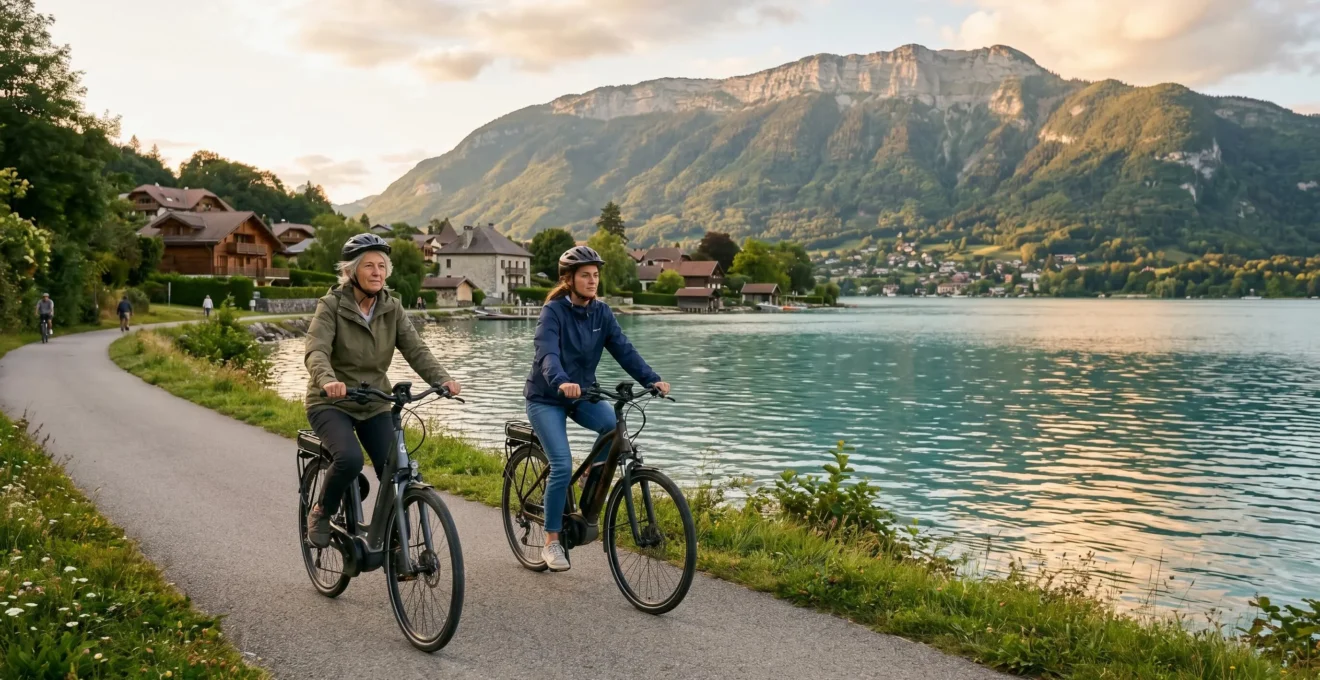
Picture the moment you realise the climb ahead doesn’t mean exhaustion. That ridge overlooking Lake Annecy—the one that seems reserved for seasoned cyclists—suddenly becomes your afternoon destination rather than a distant fantasy. Electric bikes rewrite the equation in alpine terrain, transforming Annecy’s dramatic topography from obstacle into invitation. The turquoise water spreads below, medieval villages punctuate the shoreline, and the effort required to reach these perspectives has just dropped by half.
Hiring an e-bike here isn’t about avoiding exertion entirely. It’s about choosing which challenges you face and which barriers you eliminate, making a single day sufficient for experiences that would otherwise demand athletic conditioning or multiple visits.
Your Annecy e-bike day in 4 essentials
- Lakeside loop (20km, 2h) suits first-timers; Semnoz climb (3-4h) rewards moderate fitness with panoramas
- Book 3-7 days ahead in July-August; shoulder seasons offer same-day availability
- Use full assistance on climbs (when it matters), eco mode on flats (battery lasts 50-80km)
- Check alpine weather forecast; carry light waterproof even in summer
This guide cuts through generic cycling advice to focus exclusively on what matters when you have limited time in Annecy and want to maximise your alpine experience without athletic preparation. Rather than listing every possible route, it identifies three proven itineraries matched to realistic fitness levels and time constraints, then addresses the practical friction points—booking timing, battery management, weather assessment—that determine whether your e-bike day delivers or disappoints.
Annecy’s geography makes the electric bike equation uniquely compelling. A pristine alpine lake sits at 446 metres altitude, surrounded by peaks reaching 1,500-2,000 metres within cycling distance. The gradient differential creates natural barriers on conventional bikes but becomes navigable opportunity with pedal assistance. The lakeside infrastructure—dedicated paths, village services, predictable weather patterns at water level—provides a safety foundation, while the accessible mountain routes above offer progression for those ready to test their expanded range.
Annecy’s landscapes unleashed: the electric bike advantage
Walking Annecy’s old town reveals medieval charm but limits your radius to a few waterfront kilometres. Driving solves distance but traps you in traffic queues during peak season, then strands you in car parks precisely where the scenery begins. Standard bikes work beautifully on the flat lakeside circuit—until you contemplate the alpine passes rising 700 metres above the shoreline, where gradient and distance conspire to exclude anyone without weeks of training.
Electric pedal assistance changes the calculation. What catches visitors off guard is how the technology doesn’t replace effort but recalibrates possibility. To ensure a premium experience, choosing a professional service for your electric bike rental in Annecy is essential. Mobilboard offers high-quality equipment and deep local route knowledge, transforming a logistical challenge into a seamless morning departure. Their expertise allows you to navigate the alpine terrain with total confidence, focusing on the breathtaking scenery while they handle the technical reliability of your ride.
This accessibility is supported by expanding infrastructure. According to cycling infrastructure data published by the Lake Annecy Tourist Office in 2025, the region now offers 132 km of dedicated cycle paths, expanding to 220 km by the end of the decade—infrastructure designed specifically for this kind of exploration.
The standout advantage is temporal compression. Routes requiring supreme fitness or multi-day itineraries on traditional bikes become achievable half-day excursions. You’ll feel your legs working, but cardiovascular strain vanishes, letting you focus on views rather than heart rate. The battery handles gradient mathematics while you steer.
Three rides that capture the region’s essence
Annecy’s cycling potential sprawls across dozens of possible routes, but three itineraries capture the spectrum of what a hired e-bike unlocks. Each represents a different commitment level and reward profile, allowing you to match your available time and appetite for altitude against the experiences you prioritise.
| Route | Duration | Fitness need | Photo highlights | Weather exposure | Battery demand |
|---|---|---|---|---|---|
| Lakeside loop | 1.5-2.5h | Low (flat) | Lake reflections, villages, Duingt castle | Low (sheltered path) | Minimal (20-30%) |
| Semnoz ascent | 3-4h | Moderate (e-bike assisted climb) | Panoramic summit vista, alpine meadows | Moderate (altitude variability) | Medium (40-50%) |
| Col de la Forclaz full | 5-6h | Moderate-High (distance + elevation) | Mountain pass views, remote villages | High (exposed pass) | High (60-75%) |
Lakeside loop: the scenic foundation
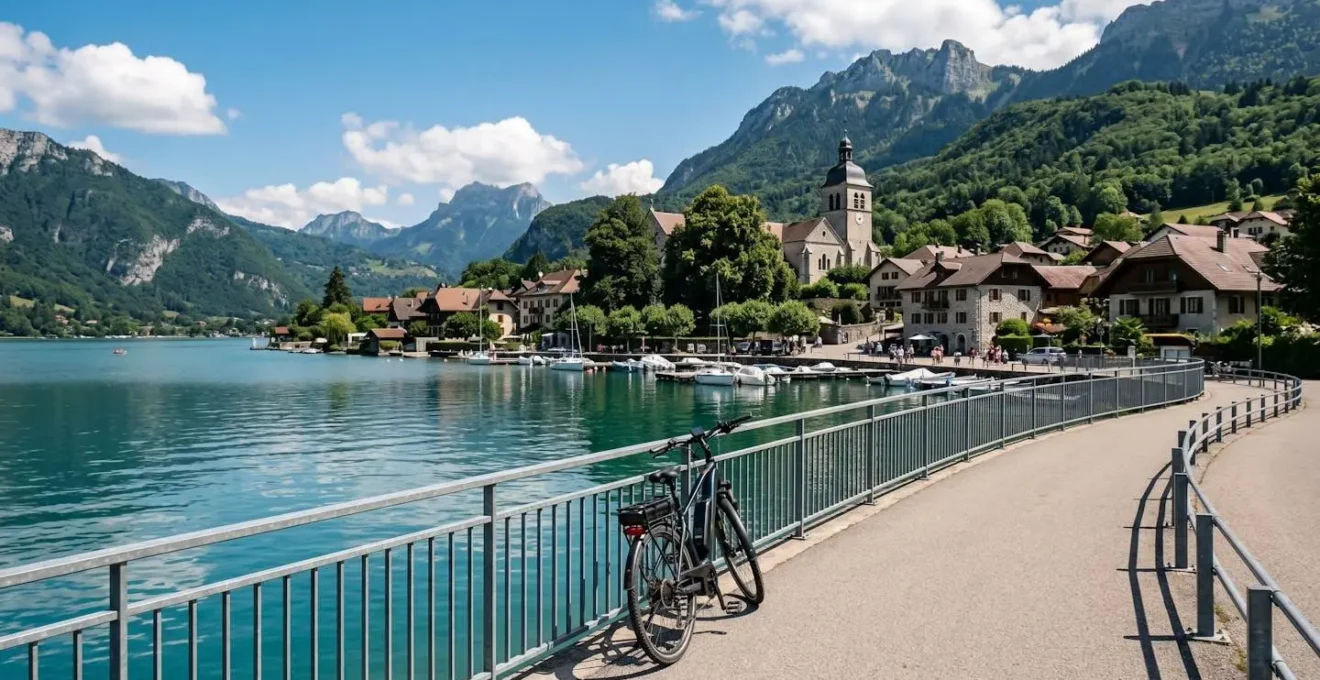
The 20km circuit hugs the eastern shoreline from Annecy through Veyrier, Menthon-Saint-Bernard, and Talloires before looping back. Gradient stays negligible—ideal for testing your bike’s handling and building confidence. Most riders complete it in 1.5-2 hours, though waterfront cafés easily extend this to a half-day.
Visual landmarks anchor navigation: the château de Menthon-Saint-Bernard perched on its outcrop signals the lake’s widest section, while Talloires’ abbey marks the turnaround point at 13km. The dedicated cycle path separates you from traffic, making it safest for families. Battery consumption barely registers—expect 20-30% usage even with higher assistance.
Semnoz ascent: alpine perspectives within reach
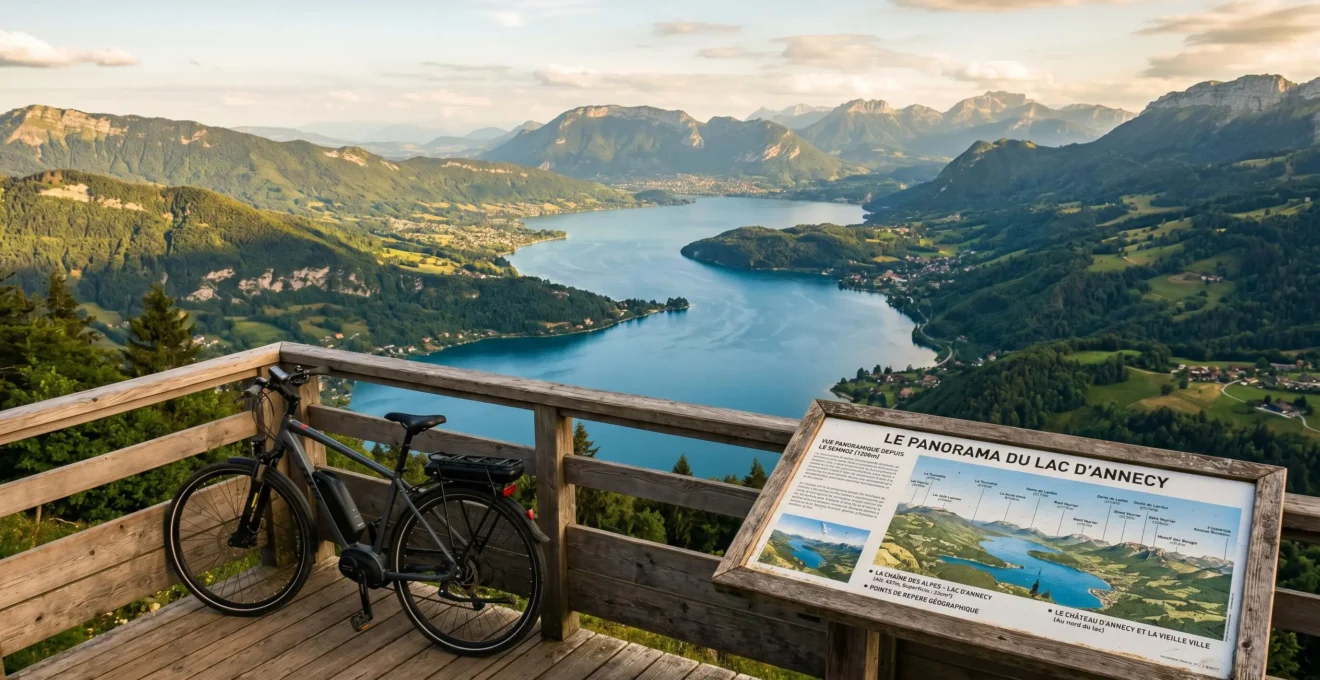
Climbing to Semnoz‘s accessible viewpoints between 1200-1400 metres altitude represents the sweet spot between effort and reward. The route follows road ascent D41 through forest before emerging onto alpine pastures where Lake Annecy spreads below in full panoramic view, its distinctive curved shape framed by surrounding peaks.
Expect roughly 3-4 hours round trip with motor assistance reducing perceived exertion by 40-60% compared to conventional bikes. Riders in their sixties regularly complete this route—it’s about honest self-assessment of sustaining moderate effort, not peak athleticism.
Consider Marie, a 58-year-old visitor with moderate fitness but no recent cycling experience, who questioned whether Semnoz was realistic. By selecting high assistance on sustained gradient sections and pacing herself with two brief photo stops, she reached the 1200m viewpoint in 3h20—tired but exhilarated, with energy remaining for summit lunch. The e-bike didn’t eliminate effort; it eliminated the cardiovascular barrier that would have stopped her on a traditional bike. The descent rewards patience—controlled speed lets you appreciate gradient from the opposite direction, with glimpses through trees toward the water below.
Forclaz and beyond: the committed explorer’s day
Col de la Forclaz sits at 1,147 metres, connecting the eastern shore near Talloires to Montmin via 700 metres elevation gain over 10 kilometres, as detailed in the Thônes Cœur des Vallées territorial authority’s pass guide. The road averages 7% gradient with sections reaching 11.5%—challenging even with electric assistance, but iconic (Tour de France has featured this climb four times).
Allocate 5-6 hours and start with full battery charge. The 50km+ round trip consumes 60-75% capacity, leaving minimal margin for detours. What you gain is remoteness and perspectives most tourists never witness. Pack lunch or plan a stop in Montmin—the pass offers limited facilities. Weather becomes critical at altitude; clear visibility can turn punishing if afternoon storms develop. The lakeside loop forgives miscalculations, Semnoz offers bailout options, Forclaz requires commitment.
The rental process: from booking to pedalling off
Most operators maintain online reservation systems for dates, bike models, and additional equipment. Confirmation arrives within hours, though peak summer weekends (July-August) benefit from 5-7 days’ notice for higher-spec models. Shoulder seasons (May, June, September) usually accommodate 24-48 hours’ lead time, occasionally same-day.
Arrival triggers identification, deposit (credit card pre-authorisation), and bike fitting. Staff assess your height and route to recommend frame sizes and motor specs. Understanding criteria for choosing an electric bike helps you participate actively rather than accepting defaults. Safety briefing covers motor controls, assistance levels, battery monitoring, and mechanical troubleshooting. Helmet fitting, lock demo, and brake/tyre checks complete preparation—budget 15-20 minutes before departure.
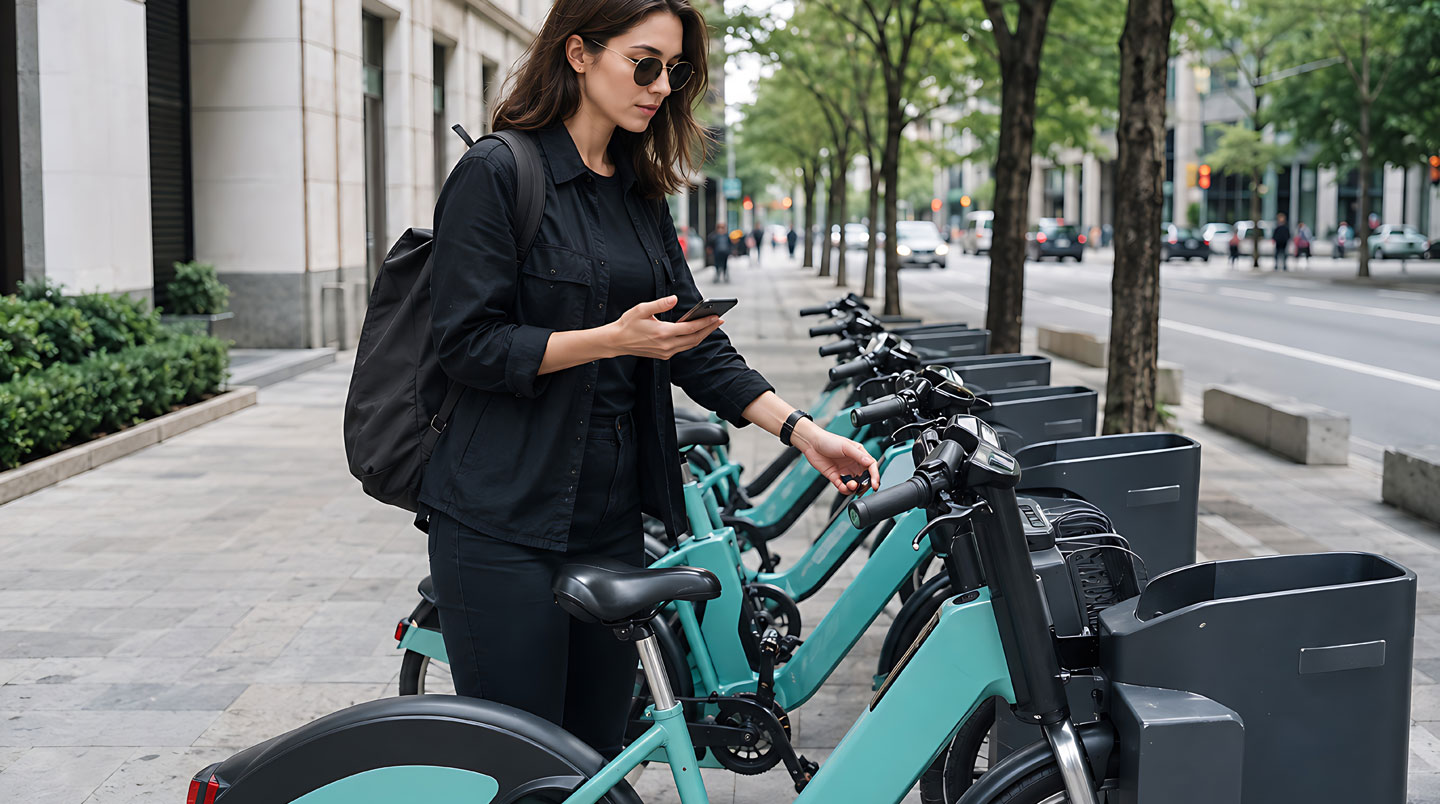
The battery paradox first-timers get wrong: Beginners conserve battery on climbs (when assistance delivers maximum value) then use high power on flats (when least needed). Result: exhausting climbs and wasted capacity. Optimal strategy reverses this—full assistance on sustained gradients like Semnoz or Forclaz, eco mode on lake flats. Modern batteries, as confirmed by the Range Control specifications documented by Bosch eBike Systems for 2025, provide 50-80km range with Eco+ mode that auto-deactivates on flats. You have capacity to spare where gradient genuinely challenges your legs.
Daily rates range 35-50 € depending on specification and season, typically bundling helmet, lock, and basic insurance. Verify inclusions at booking—panniers, maps, and GPS may carry supplemental charges. Return procedures: staff inspect bike for damage, verify battery and equipment, release deposit. Most operators accommodate early returns without penalty, though without pro-rated refunds.
Your quick questions answered
What fitness level do I genuinely need for the Semnoz route?
If you can walk uphill for 20 minutes without stopping, e-bike assistance brings Semnoz within reach. The motor removes cardiovascular strain while maintaining moderate physical engagement. Riders in their sixties regularly complete this route; it’s about honest self-assessment, not peak athleticism.
How far ahead must I book during summer peak season?
July-August weekends: 5-7 days recommended for guaranteed bike choice, especially higher-spec models. Midweek or shoulder seasons (May-June, September): 24-48 hours usually suffices, sometimes same-day. If your dates are fixed, booking a week ahead eliminates stress; if you’re flexible, checking availability 2-3 days out often works.
What happens if weather turns bad mid-ride?
Alpine summer storms typically pass within 30-60 minutes. Lakeside routes offer village shelter every 4-5km (Talloires, Menthon-Saint-Bernard). Semnoz and Forclaz have fewer options—check mountain forecasts before departure. Most rentals don’t penalise weather-related early returns; verify at booking.
How do battery ranges vary between different e-bike models?
Battery capacity varies by model and the ranges of electric bikes available reflect different use cases—city commuting versus alpine touring. Annecy rental operators stock models suited to mountainous terrain. Expect 50-80km range on moderate assistance, ample for all three suggested routes. The real variable is your assistance level choice, not battery capacity.
Consider which route matches your available time and altitude appetite. The lakeside loop builds confidence without battery anxiety. Semnoz delivers disproportionate reward for moderate commitment. Forclaz demands respect but reveals what you’re capable of when gradient stops limiting you. The decision determines your dinner conversation—tranquil villages, summit panoramas, or mountain passes that redefine a cycling day. Book the equipment, then let your legs and the landscape negotiate the answer.